Broken Key Removal in 1234 Barton Springs Rd, Austin, TX, US
24/7 Rapid Key Extraction Across 1234 Barton Springs Rd, Austin, TX, US • Protect Cylinders • Damage-Free Techniques • DBS Checked Technician • Fully Insured • Upfront Price Before Work Begins.
Snapped Key Removal
We remove broken keys from cylinders, padlocks, and mortice locks without delay.
Damage-Free Techniques
Specialist extractors and lubrication to protect the lock mechanism.
Clear Upfront Pricing
You get a fixed quote after assessment — work starts only after approval.
DBS Checked & Insured
Local technician with common barrels and keys for immediate fixes.
Professional service • Clear pricing • DBS checked
Broken Key Removal in 1234 Barton Springs Rd, Austin, TX, US
A snapped key is one of those problems that instantly becomes urgent — especially if you're locked out, the door won't secure properly, or the broken piece is jammed deep inside the lock. Broken key removal is about more than simply "pulling it out": the best outcome is safe extraction with minimal damage, while also avoiding further damage to the lock during the process, restoring smooth operation, and confirming whether the lock is still reliable afterwards.
In1234 Barton Springs Rd, Austin, TX, US, electrician provides emergency broken key extraction for common UK lock types, including uPVC doors with Euro cylinders and multi-point locking, mortice locks on timber doors, and night latches. The first step is a quick assessment of what's happened: whether the broken key is protruding or flush/buried, whether the lock is stiff or jammed, and whether the door is locked from inside or a key is left in the back. These details change the method, the time on site, and sometimes whether a cylinder replacement is the sensible next step. Various methods may be used depending on the situation, and selecting the best method is crucial for a successful outcome.
Where possible, extraction is done using non-destructive techniques and a drill-last approach. Specialist tools are used for safe and efficient removal, and having the necessary tools is essential for effective broken key removal. Once the fragment is removed, the lock is tested for smooth turning, alignment, and any internal damage (pins, cam, boltwork) that could cause another break or a future lockout. If a replacement is needed, it's usually the cylinder rather than the whole lock, and there are options that improve security and reduce the risk of repeat failures.
Emergency snapped key extraction in 1234 Barton Springs Rd, Austin, TX, US
Broken keys often happen at the worst times: rushing out, returning late, or when the lock has been getting stiffer over days or weeks. Emergency broken key removal focuses on two priorities — regaining access and making sure the door can lock securely again.
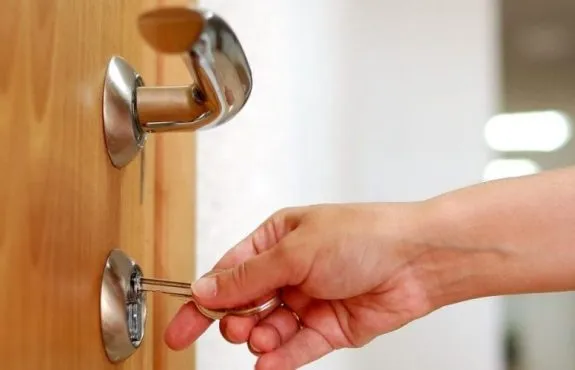
When you're locked out vs when the door still opens
If the door won't open, the job may involve careful door opening methods (again, damage-minimised wherever possible) before extraction can be completed safely. If the door opens but the key is broken inside, keeping the lock stable becomes the priority — preventing the fragment from being pushed deeper or twisting pins out of position. At this stage, a suitable tool is carefully inserted into the lock to engage and remove the key fragment.
Information that helps speed up a clean extraction
A few practical details make a big difference to first-time success:
This isn't about paperwork — it's about choosing the right method quickly and avoiding unnecessary force. Some people try to use household items for extraction, but this can sometimes make the problem worse.
Damage-minimised broken key removal: how it's done
Most people worry about the same thing: "Will this wreck my lock or door?" Good broken key removal is a controlled process. The aim is to remove the fragment without widening the keyway, without damaging pins, and without turning a simple fix into a new lock installation. Keeping the lock properly lubricated can reduce friction, making extraction safer and helping to prevent further damage.
Step 1: Initial assessment of the break
Not all breaks are equal. A key can shear because it's worn, bent, poorly cut, or because the lock was binding. The locksmith will check:
This determines whether the lock can be extracted immediately or needs tension released first.
Step 2: Non-destructive extraction methods (first choice)
Where the fragment is accessible, specialist extractors and controlled tension techniques can remove it cleanly. A key extractor or broken key extractor tool, often featuring a small hook, is inserted into the lock to grab and grip the broken key fragment so you can pull the key out safely. The focus is on precision, not brute force. In many cases, the lock can be returned to normal operation with no visible change.
Step 3: A drill-last approach (only when necessary)
Drilling is not the default. Drilling is only considered after several attempts with all the methods have failed to remove the key. It's used only when the fragment is deeply jammed, the lock is already failing internally, or a previous DIY attempt has caused damage. Even then, the goal is normally targeted work that preserves the door and avoids unnecessary replacement of parts that still function correctly.
Step 4: Post-extraction checks that prevent repeat problems
After removal, the lock should be tested properly:
This is the point where it becomes clear whether you've avoided a replacement — or whether a cylinder swap is the sensible, reliable next step.
Broken key scenarios that change the approach in 1234 Barton Springs Rd, Austin, TX, US
Two broken keys can look similar but behave very differently. The scenario changes the method, how long it takes, and whether parts are likely to be needed. The approach to broken key removal may also change depending on whether the broken part or a broken key piece is accessible.
Protruding fragment vs flush/buried fragment
A fragment that protrudes slightly can often be removed quickly and cleanly. However, it is important to slowly pull the fragment out, using gentle pressure, to avoid pushing it deeper into the lock or causing additional damage. A fragment that is flush or pushed deeper may require more delicate work and can be affected by the lock's internal state (pins engaged, tension present, key turned at the moment it snapped).
If you've tried to "fish it out" with improvised tools, it can push the piece deeper or burr the keyway — which increases time and can change the outcome.
Broken key plus a stiff or jammed lock
If the lock has been stiff for a while, a snapped key is often a symptom rather than the cause. The lock may be binding due to:
In these cases, extraction is only half the job — the lock must be made reliable again, or the next key may snap too.
Key left in the back or locked from inside
With Euro cylinders, a common complication is a key left on the inside. Depending on the cylinder type, this can prevent another key from being used externally and can make extraction more complex. A similar issue occurs where the lock is engaged and the door is locked from inside.
The solution depends on the cylinder design (including whether it has an emergency function) and the position of the cam at the time of break.
Multi-point locking considerations (uPVC doors)
If the handle must be lifted to engage multi-point hooks, rollers, or bolts, the door's alignment matters. A door that drops even slightly can increase resistance and contribute to key breakage. Key breaks here are frequently linked to: modern keys, which are often made from materials like nickel silver. These non-magnetic metals can affect extraction methods, as they are less responsive to magnets. After extraction, it's important to confirm that the door locks smoothly through a full cycle — not just that the key turns once.
Broken key removal by lock type
Different locks fail in different ways, and the best extraction method depends heavily on the hardware. The approach and complexity of broken key removal can also vary depending on the type of lock involved.
uPVC doors with Euro cylinders (the most common UK setup)
Euro cylinders sit within a handle set, often paired with multi-point locking. Key breaks here are frequently linked to:
Extraction aims to protect the cylinder and keyway. If the cylinder is worn or damaged, replacement is usually straightforward — and can be upgraded to improved security at the same time.
Mortice locks on timber doors
Mortice locks are common on older timber doors and some internal security doors. Broken keys here can be tied to:
A careful extraction matters because damage inside a mortice case can lead to unreliable locking or a door that won't latch properly. Sometimes, a thin blade—such as a modified hacksaw blade—can be used as a DIY tool to help extract a key fragment from a mortice lock.
Night latches (Yale-type rim locks)
Night latches are often used as secondary locks and can be sensitive to poor alignment or worn keys. Extraction focuses on removing the fragment without damaging the rim cylinder. Tools like needle nose pliers or a paper clip can sometimes be used to extract the broken key. Post-extraction testing is important because many night latches develop stiffness that encourages force — which is exactly what snaps keys.
Padlocks, garage locks, and outbuildings
Broken keys in padlocks and garage door locks are common, particularly where locks are exposed to damp, dirt, or cold. These can be simpler extractions, but severe corrosion can mean replacement is more reliable than forcing a failing mechanism back into service. In some cases, a strong magnet or a jigsaw blade can be used to retrieve a broken key from a padlock or garage lock.
Do you need a new lock or can it be repaired?
One of the biggest concerns after a snap is cost: "Is this going to mean replacing everything?" Often, no. But the right answer depends on what caused the break and what the lock looks like once the fragment is out. In some cases, a new key can be made using the broken key as a template, depending on the condition of the broken key and available key duplication techniques.
When replacement is necessary vs avoidable
Replacement is more likely when:
Replacement is often avoidable when:
Cylinder replacement options (common on uPVC/Euro setups)
If a Euro cylinder needs replacing, that doesn't mean replacing the whole door lock. Cylinder swaps can be sized correctly to the door and handle set, and can be selected to improve security and reduce future issues. Options may include improved resistance to snapping and smoother operation (depending on model). Replacement cylinders can often be sourced from a local hardware store.
Rekeying: changing the keys without changing everything
In some situations — particularly where security is a concern — rekeying or replacing the cylinder allows you to change the working keys without changing the entire lock case or multi-point mechanism.
Replacement keys and spares after extraction
After a break, many households realise they've been relying on a single worn key or a poor-quality copy. Cutting a fresh key from the correct profile (rather than duplicating a worn copy repeatedly) can improve smoothness and reduce stress on the lock.
Costs and price factors for broken key removal in 1234 Barton Springs Rd, Austin, TX, US
Broken key removal is usually priced as a service call with variables based on complexity and any parts needed. The cost may also reflect the expertise required for a professional locksmith to remove the key, especially when specialist tools are needed for the job. The most helpful pricing conversations are the ones that explain what's included and what can change on site.
What's typically included
In most cases, the service includes:
If parts are required (most commonly a cylinder), that's usually itemised separately.
Price factors that change the total
Common price factors include:
A clear breakdown prevents surprises and helps you decide whether repair or replacement is the best value.
Typical time on site (what to expect)
Time varies by scenario. A straightforward protruding fragment in a healthy lock can be quick. A flush fragment in a stiff lock — or a lock compromised by DIY attempts — can take longer. It's also normal to spend time on testing and adjustment after extraction, because the point is not only to remove the key but to leave the lock dependable.
Broken Key Removal Pricing for 1234 Barton Springs Rd, Austin, TX, US
| Service option | Average on-site time | Standard hours (7am–6pm) starting from | Out-of-hours (6pm–7am) starting from | Notes |
|---|---|---|---|---|
| Broken key removal (fragment protruding) | 45 mins | £59 | £99 | Non-destructive extraction where possible; lock tested after. |
| Broken key removal (fragment flush/buried) | 1 hr 15 mins | £74 | £124 | Delicate extraction; lock function checks included. |
| Broken key removal from stiff/jammed lock | 1 hr 30 mins | £89 | £149 | Includes assessment of binding/stiffness; advice on next steps. |
| Locked out due to snapped key (door opening + extraction) | 1 hr 30 mins | £89 | £149 | Damage-minimised entry where possible; secure re-locking checked. |
| Locked out on uPVC multi-point (engaged system) + extraction | 1 hr 45 mins | £104 | £174 | Multi-point cycle checked after; alignment resistance may affect time. |
| Euro cylinder with key left in the back + extraction | 1 hr 30 mins | £89 | £149 | Depends on cylinder type/emergency function; case-by-case. |
| Mortice lock (timber door) broken key extraction | 1 hr 15 mins | £74 | £124 | Careful removal to avoid internal damage; operation tested after. |
| Night latch (Yale-type rim lock) broken key extraction | 1 hr | £59 | £99 | Focus on protecting rim cylinder; smooth turning checked after. |
| Padlock / garage lock / outbuilding broken key extraction | 1 hr | £59 | £99 | Weather/corrosion can increase complexity; replacement may be recommended (parts extra). |
Safe-entry standards, trust checks, and workmanship
Locksmith work is access-sensitive by nature. Professional standards aren't just about tools — they're about safety, verification, and accountability.
Proof of occupancy and responsible entry
In many situations, a legitimate locksmith will take reasonable steps to confirm occupancy or authorisation (especially when a door is being opened). This protects residents and discourages misuse of emergency locksmith services.
Insurance and liability cover
Because broken key removal can involve door hardware and security, it's reasonable to expect insured work and care around finishes, handles, and cylinders. This is particularly relevant where a lock is delicate, high-security, or part of a multi-point mechanism.
Guaranteeing the outcome
A good service isn't only "key removed" — it's "lock works smoothly and locks securely". Where parts are fitted or adjustments made, workmanship standards and sensible guarantees provide reassurance that the fix is meant to last, not just get you through the night.
Commercial premises and controlled access
For businesses, broken keys can affect access control and operational security. In commercial contexts, considerations may include restricted areas, key management, and ensuring the final solution restores secure access without introducing new vulnerabilities.
Preventing another snapped key
A broken key is often a warning sign. Addressing the underlying cause can reduce the chance of the next key snapping — and can prevent a more expensive lock failure later. When lubricating your lock, avoid oil based lubricants as they can attract dirt and cause long-term damage; instead, use a silicone based lubricant, especially for outdoor locks, to reduce friction and maintain lock integrity.
Replace worn, bent, or poor-quality copies
Old keys wear down gradually. Copies made from worn keys tend to be worse, not better — and can increase resistance in the keyway. Replacing heavily worn keys can noticeably improve smoothness.
Keep the door and lock aligned
uPVC doors can drop slightly over time. If you have to lift the handle hard, push/pull the door, or "wiggle" the key to lock, alignment may be stressing both the mechanism and the key. Small adjustments can reduce load and help locks operate smoothly.
Use lubrication correctly (and sparingly)
Not all sprays are suitable for locks. Over-lubrication can trap grit and make things worse. If the lock is persistently stiff, it's better to address the cause than to mask it repeatedly.
Cold weather and exposed locks
Padlocks, garage locks, and external locks are more prone to stiffness in winter. Moisture and grit can increase resistance and encourage force — the main ingredient in key snapping.
FAQs about broken key removal in 1234 Barton Springs Rd, Austin, TX, US
Can I remove a broken key myself?
Sometimes, but it's easy to make it worse. Common DIY attempts that cause problems include: superglue methods (glue enters the keyway and binds pins), drilling without understanding the lock (permanent damage), improvised tools that burr the keyway or push the fragment deeper, and snapping an extractor tool inside the lock. If the fragment is flush and the lock is stiff, DIY often turns a simple extraction into a replacement job.
What should I do immediately after the key snaps?
If you can, avoid turning the lock further or inserting tools that could push the fragment deeper. Keep any broken pieces of the key, and note whether the lock was stiff beforehand. If the door is currently insecure, prioritise making it secure once the extraction is complete.
Will you always need to drill the lock?
No. Non-destructive methods are typically attempted first. Drilling is usually a last resort when the lock is already compromised, the fragment is severely jammed, or the keyway has been damaged by earlier attempts.
Can you remove a broken key if another key is left in the back?
It depends on the cylinder type and the position of the cam. Some cylinders allow external operation even when a key is inserted inside; others don't. This is a common scenario and is handled case-by-case.
Do I need to replace the whole lock after a snapped key?
Often, no. On many uPVC doors, replacing the Euro cylinder is enough if replacement is necessary at all. On mortice locks, the lock case may remain usable if there's no internal damage.
Do you handle padlocks and garage locks as well?
Yes, broken keys in padlocks and garage locks are common. Corrosion and weather exposure can mean replacement is the most reliable solution, but extraction is often possible depending on condition.
Who's responsible — landlord or tenant?
It depends on the tenancy agreement and the cause. If the lock is faulty or worn, it may fall under maintenance. If a key has been damaged through misuse, it may be treated differently. Keeping the broken key and noting any long-term stiffness can help clarify the likely cause.
Emergency Broken Key Removal in 1234 Barton Springs Rd, Austin, TX, US
Key snapped in lock? Locked out? Don't risk DIY methods that could make things worse. We provide professional broken key extraction across1234 Barton Springs Rd, Austin, TX, US with non-destructive methods and reliable outcomes.